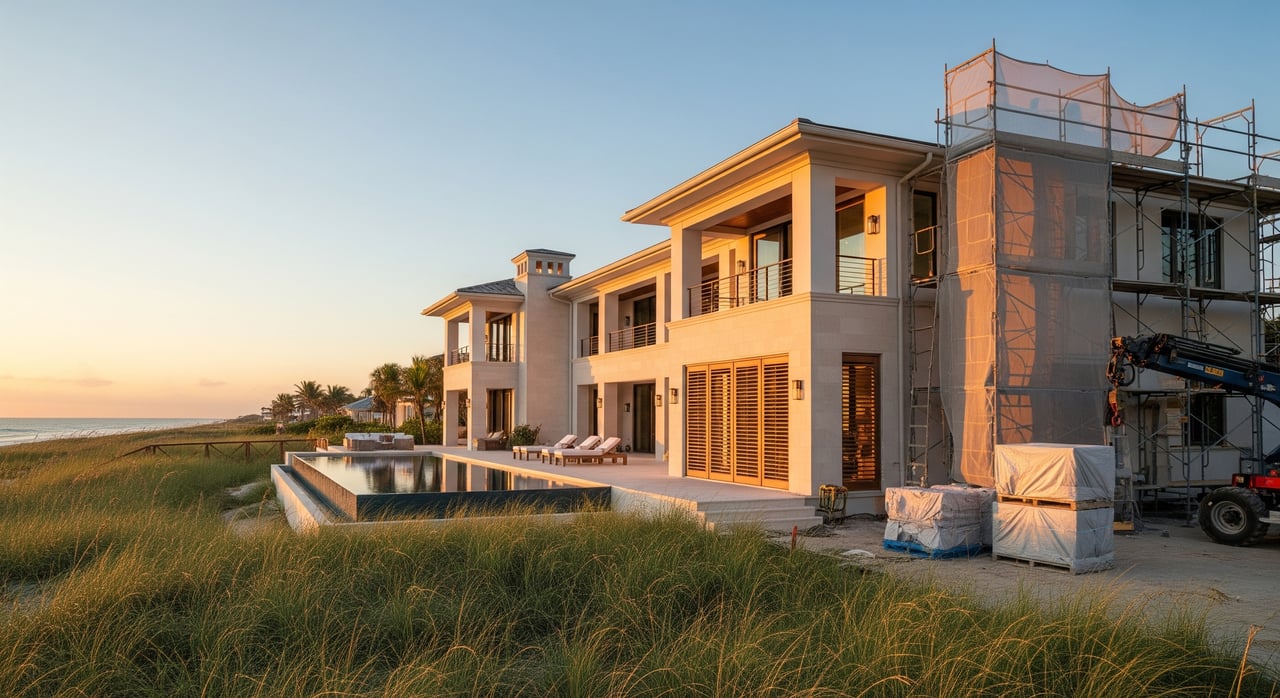
Thinking about buying on Jupiter Island and torn between a teardown or a renovation? Coastal properties here come with added layers of permits, timelines, and seasonal constraints that can make or break your plan. You want clarity on what it takes, how long it might run, and how to protect your offer and budget. This guide breaks down permitting paths, realistic timelines, and the biggest cost drivers so you can move forward with confidence. Let’s dive in.
New build vs. renovate: Permit paths
New construction path (teardown to new home)
A new custom home on Jupiter Island typically involves coordinated reviews at the town or county level plus state and sometimes federal approvals.
- Start with a local zoning and buildability check to confirm setbacks, height, lot coverage, and design review requirements through the Town of Jupiter Island planning and building resources and the Martin County Building Division. This defines what you can build and where.
- Secure a demolition permit. Expect utility disconnect coordination and an asbestos survey or abatement for older structures before demo.
- Address coastal and environmental authorizations early. If your work is seaward of the Coastal Construction Control Line, you will need a CCCL permit from the Florida Department of Environmental Protection. Seawall, dune, or shoreline work may trigger DEP and possibly the U.S. Army Corps of Engineers regulatory program.
- Projects with drainage, filling, or wetlands impacts often need an Environmental Resource Permit through the South Florida Water Management District.
- Submit the full building permit package locally. Expect civil/site plans, structural drawings for elevated or pile foundations, MEP plans, and energy compliance. Design must meet current Florida Building Code and flood standards; you can review code information via the Florida Building Commission.
- Provide FEMA/NFIP documentation, including an elevation certificate and design to Base Flood Elevation plus any required freeboard. Flood compliance can affect the foundation type, openings, and materials.
- Complete utility tie-ins, offsite work permits if needed, final inspections, and obtain the certificate of occupancy.
Renovation or repair path
Renovation requirements depend on scope, structure, and proximity to the beach or water.
- Minor interior updates may need limited trade permits. Structural changes or system upgrades require full building permits and inspections.
- If the work value meets the “substantial improvement” threshold based on NFIP and local rules, you may need to bring the structure into full compliance with current flood and building code requirements. This can include elevating the finished floor, adding flood vents, and upgrading structural connections.
- Changes to footprint, impervious area, or drainage can trigger stormwater review and possibly SFWMD permitting.
- If a home sits near dunes or seaward of the CCCL, expect DEP review even for repairs.
Coastal permits that apply to both
Beach and dune work requires DEP authorization, and seawall or shoreline stabilization often involves DEP plus local permits. Some projects need Army Corps review. Sea turtle nesting season typically runs March through October, which can limit timing for beachfront or lighting-related work. Many owners schedule dune or marine construction outside this window to reduce delays.
Timelines you can actually plan around
Every site is different, but coastal projects on Jupiter Island follow a few predictable ranges. Use these to set expectations and negotiate realistic contingencies.
- Simple cosmetic renovation: 2 to 8 weeks from planning through completion if permits are minimal.
- Moderate renovation with structural or MEP updates: 3 to 9 months.
- Major renovation or substantial improvement: 6 to 18 months, especially if elevation or flood compliance upgrades are required.
- New luxury home, teardown to occupancy:
- Pre-construction permits and approvals: 3 to 12 months. CCCL, SFWMD, Army Corps, or any variance/design board hearings can extend this.
- Construction: 12 to 24 months or more due to piling, seawall coordination, and custom finishes.
- Total timeline: 15 to 36 months is common for complex coastal builds.
- Seawall or coastal mitigation projects alone: 3 to 12 months, depending on agency involvement and contractor availability.
The biggest schedule drivers include DEP CCCL review, SFWMD ERP cycles, any federal Army Corps coordination, substantial improvement determinations, and sea turtle nesting season restrictions. Marine contractor lead times, design complexity, and specialty materials can add additional months.
Budget impacts and carrying costs
What drives construction costs
Coastal builds and significant renovations face specialized requirements that affect pricing.
- Elevated or pile foundations for flood and soil conditions on barrier islands.
- Meeting current Florida Building Code wind and flood standards, which can require structural upgrades and high-performance windows.
- Seawall repair or replacement when waterfront edges are compromised.
- Salt-air resistant materials and corrosion-resistant fasteners.
- Site work that protects dunes, manages drainage, and controls erosion.
- Professional and soft costs, including architecture, engineering, surveys, geotechnical, permitting, and required mitigation or restoration.
Renovation cost factors to watch
- Substantial improvement rules can turn a planned remodel into a near-rebuild if the cost threshold is crossed.
- Hidden conditions common in older estates, like outdated electrical, plumbing, septic, or hazardous materials.
- Matching legacy high-end finishes that require custom fabrication.
Holding costs while you wait on permits
- Ongoing property taxes and insurance, including wind and flood. Vacant or partially demolished properties can cost more to insure.
- Mortgage and construction loan interest until completion.
- Security, utility minimums, and site maintenance during staging or construction.
- Lost use or delayed resale that pushes out your return.
- Impact fees or connection charges at permit time.
Plan for contingency. On coastal projects, a 10 to 20 percent contingency is common, with higher reserves for unknown site conditions or complex approvals.
Offer strategy: Protect time and money
Permitting strategy should inform your offer, especially on teardown candidates or major remodels.
Due diligence checklist before you write an offer
- Confirm whether the property is in the Town of Jupiter Island or Martin County and review applicable local processes via the town and the Martin County Building Division.
- Pull the FEMA flood zone and Base Flood Elevation for the exact lot using the FEMA Flood Map Service Center. Request an elevation certificate if the seller has one.
- Check if the property is seaward of the CCCL and whether DEP coastal rules will apply via the Florida DEP CCCL program.
- Request existing surveys, permits, as-builts, and seawall records from the seller.
- Verify recorded easements, dune preservation areas, and setback lines that affect your buildable area.
- Budget for a geotechnical report to inform piling and foundation design, plus a seawall assessment if waterfront.
- Confirm utility availability and capacity, including sewer versus septic.
- Consider vegetation, dune, or habitat assessments for protected species or seasonal constraints.
- Review any historic or deed restrictions that affect demolition or design.
Contract clauses to consider
- An extended due diligence period of 60 to 180 days or more to allow surveys, geotech, pre-application meetings, and preliminary agency feedback.
- A permitting contingency that allows exit if key approvals like CCCL, ERP, or seawall permits are not obtainable within a set timeframe.
- Cost and inspection contingencies to address hazardous materials, structural issues, or substantial improvement triggers that change the economics.
- Holdbacks or escrow to address known conditions.
- Clarity on who pays for demolition, asbestos abatement, or urgent repairs before closing.
Decision guide: Build new or renovate?
Use these quick filters to shape your direction.
- Choose new construction if the existing structure sits below current BFE, needs full structural upgrades, or if you want to maximize livable square footage within local limits. The path is longer but offers a clean, code-compliant design and modern systems.
- Choose renovation if the structure is in good condition, your scope stays below the substantial improvement threshold, and you can preserve high-value elements without triggering full floodplain upgrades.
- Consider a hybrid approach. Some owners complete seawall or site work first, then phase a renovation or plan for a new build once approvals and contractor availability line up.
Who to hire early
Coastal projects benefit from a strong team from day one.
- A local architect and structural engineer experienced with Jupiter Island zoning and Florida wind and flood design.
- A coastal civil engineer for site drainage, floodplain compliance, and seawall planning.
- A marine contractor with DEP and Army Corps permitting experience.
- A permitting expeditor and, when needed, a land-use attorney who knows town and county processes.
- A general contractor familiar with high-end coastal builds and local subcontractor schedules.
- Insurance and lending partners who understand coastal underwriting and construction loans.
How Trisha helps you move faster
You deserve an advisor who can translate coastal permitting into a clear plan. With more than 15 years in construction and permitting, Trisha aligns site realities with your goals. Here is how she helps you compare options and act decisively.
- Scope and timeline clarity. You will get a practical path and realistic timeline based on CCCL, flood, and stormwater needs, plus insights on seasonal constraints like sea turtle nesting.
- Cost-informed strategy. Expect upfront guidance on foundation types, seawall implications, and whether your renovation is likely to trigger substantial improvement. We plan for contingencies and carrying costs.
- Offer and financing support. Align due diligence and permitting contingencies with your plan, and access mortgage, insurance, and bridge financing resources through our network when appropriate.
- Seamless execution. From vendor introductions to polished listing preparation if you sell, your path from vision to close is coordinated and clear.
Ready to compare your teardown and renovation options on Jupiter Island and map the right timeline for your move? Connect with Trisha Hutchinson to build your plan.
FAQs
What permits are needed to build new on Jupiter Island?
- Expect local building and zoning approvals, a demolition permit, plus coastal and environmental authorizations. Projects seaward of the CCCL may need a DEP CCCL permit and some sites require SFWMD and Army Corps reviews.
How long does it take to get permits for a coastal new build?
- Pre-construction approvals commonly take 3 to 12 months depending on CCCL, SFWMD, Army Corps, and any variances or design reviews, with total timelines of 15 to 36 months including construction.
When does a renovation trigger full flood upgrades?
- If your renovation meets the substantial improvement threshold based on NFIP and local rules, you may need to bring the structure into full compliance with current flood and building codes, which can add time and cost.
Do I need permits for seawall work before building?
- Many waterfront sites require seawall permits through DEP and sometimes the Army Corps, and seawall condition can affect building permit issuance and insurability.
How does sea turtle nesting season affect construction?
- Beachfront work often faces restrictions from March through October, which can limit lighting and beach activities and may push certain tasks to the off-season.
Where can I check my flood zone and BFE?
- Use the FEMA Flood Map Service Center to view your property’s flood zone and Base Flood Elevation, and request an elevation certificate from the seller when available.