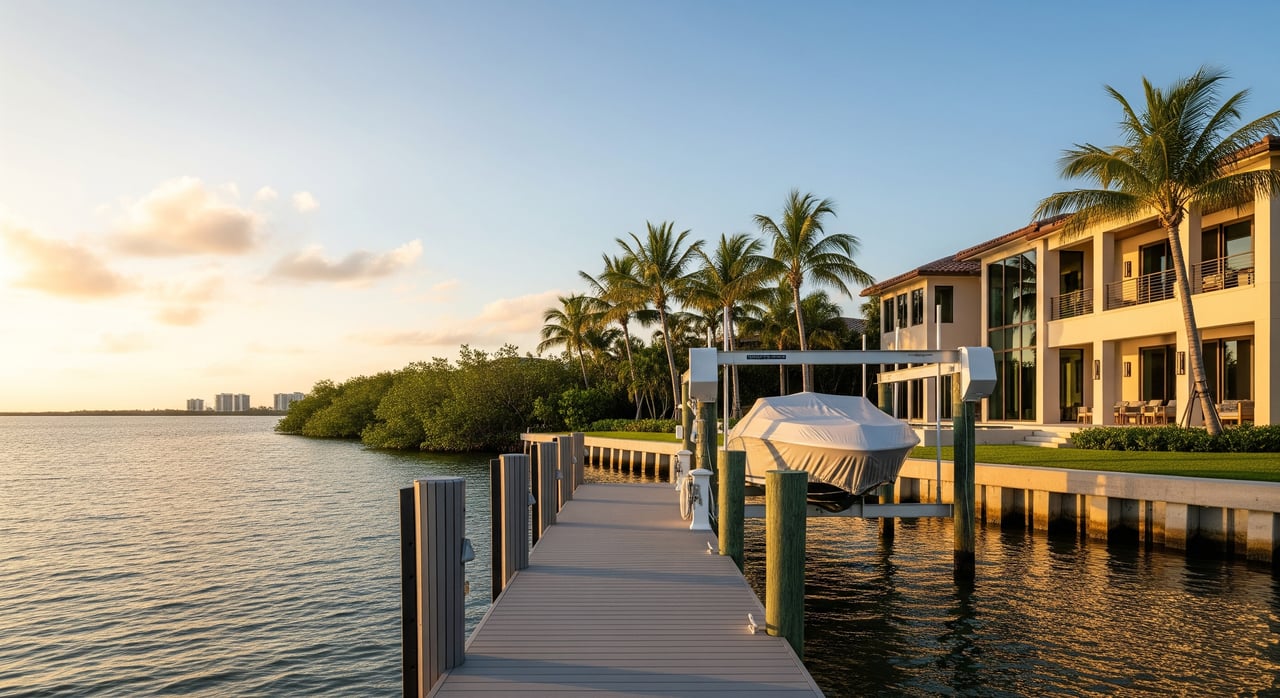
You fall in love with a Jupiter Island shoreline, then the questions hit: Can you add a dock, repair a seawall, or build beach access stairs? Waterfront living is unique, and the rules under the waterline can be just as important as the view. This guide gives you clear, buyer‑friendly answers so you can protect your plans and avoid costly surprises. Let’s dive in.
Riparian rights in Florida, explained
Riparian rights are the rights that come with land next to navigable water. In Florida, this includes reasonable access to the water and the potential to build certain structures, such as private docks, if allowed by law. These rights are limited by the public interest and by federal, state, and local rules.
Your ownership on tidal waters generally stops at the mean high‑water line. The land below that line is typically state sovereign submerged land held in trust. Any structure that extends waterward of the mean high‑water line often needs state authorization and permits. Use must be reasonable and cannot block navigation, harm the public’s access, or interfere with neighboring owners’ rights.
How this plays out on Jupiter Island
Jupiter Island is a narrow barrier island with Atlantic beachfront on one side and Intracoastal and estuarine waters on the other. The same Florida principles apply, but triggers differ by waterbody. Oceanfront work often involves beach and dune protections. Intracoastal projects more often involve submerged land authorizations and navigation checks.
Local factors matter. Dune systems, sea‑turtle nesting, and municipal rules shape what you can build and when. Community zoning and private association documents may add design standards, setbacks, and lighting rules. Plan to confirm both public and private restrictions early in your process.
Docks and boat lifts: feasibility factors
Building or modifying a dock is the most common riparian issue for buyers. Feasibility depends on jurisdiction, site conditions, and design.
State and federal triggers
- If a dock extends waterward of the mean high‑water line, you often need state authorization, such as a sovereign submerged lands lease or consent.
- Many docks in navigable waters also need federal authorization. Some small residential docks may qualify for general permits, but you must verify eligibility and conditions.
- Projects that disturb wetlands or require dredging bring additional scrutiny.
Local zoning and design standards
- County and town codes set dock size, setbacks, and design standards. Expect limits that protect navigation and neighboring properties.
- Some areas include marina or channel easements that affect placement. Confirm any no‑wake or speed zones that influence access and safety.
Site conditions that drive design
- Water depth at low tide, shoaling, and the presence of seagrass beds influence length, pilings, and lift options.
- Manatee protection and essential habitat areas can shape dock placement and boat use.
- Existing structures may need upgrades to meet current codes and permit conditions.
Smart questions to ask now
- Where is the mean high‑water line on the current survey?
- Does a state lease or prior authorization exist for the dock or lift, and is it in good standing?
- Are there seagrass beds or habitat constraints near the shoreline?
- What dock size and setbacks are allowed under current town and county rules?
Beach access and shoreline work
Oceanfront buyers often want stairs, dune crossovers, or lighting updates. These elements trigger distinct reviews on a barrier island.
Beach stairs and dune crossovers
- Work near dunes and vegetation may require review under the Coastal Construction Control Line program and local permits.
- Expect design standards that protect dune stability and limit impacts on public resources.
Seawalls, revetments, and stabilization
- Hard shoreline armoring is closely regulated because it can affect neighboring beaches and coastal processes.
- Some locations allow only certain methods or require added conditions. Federal, state, and local permits may apply.
Lighting and nesting season
- Sea‑turtle protections can limit lighting types and timing of work. Seasonal work windows and monitoring are common permit conditions on oceanfront parcels.
Surveys, title, and permits: your buyer checklist
Early verification saves time and money. Use this checklist during your inspection period.
Title and recorded documents
- Order a full title search for riparian grants, reservations, easements, or covenants.
- Ask for any recorded state leases tied to docks, seawalls, or revetments.
Survey and baseline mapping
- Obtain a recent boundary survey that shows the mean high‑water line, vegetation line, and existing structures.
- Consider an elevation certificate and a topo that relates upland grades to the shoreline and the state boundary.
Permits and past approvals
- Request copies of prior permits and authorizations for docks, lifts, seawalls, or beach work.
- Verify that construction matched permit plans and that any compliance conditions were satisfied.
Local rules and association documents
- Review town and county codes for docks, setbacks, seawalls, and coastal construction.
- Obtain HOA or POA rules for structures, materials, lighting, and contractor requirements.
Environmental and wildlife constraints
- Check for seagrass, mangrove protection, or critical habitat near the site.
- Confirm if sea‑turtle protection measures apply and note any seasonal limits.
Flood and insurance considerations
- Review FEMA flood zones and any elevation certificates.
- Ask about past high‑water events and the property’s elevation relative to base flood elevation. Discuss coverage for docks and waterfront structures with an insurance professional.
Physical condition and engineering
- For existing docks and seawalls, get a structural inspection by a marine contractor or engineer.
- Assess life expectancy, code compliance, and likely upgrade needs under current rules.
Access and navigation
- Confirm depth to the dock at low tide, shoaling risks, and any need for maintenance dredging.
- Check for navigation districts, local channel maintenance, or channel easements.
Future municipal projects
- Ask about planned beach nourishment, inlet work, or coastal projects that might affect your frontage or timing.
Permitting at a glance
Understanding the roles and timelines reduces risk when you write your offer timeline and costs.
Who reviews what
- Federal: The U.S. Army Corps of Engineers reviews structures in navigable waters and any dredge or fill. Many small residential docks use general permits when eligible.
- State: The Florida Department of Environmental Protection handles sovereign submerged lands authorizations, coastal construction reviews, and related environmental resource coordination.
- Wildlife: The Florida Fish and Wildlife Conservation Commission provides sea‑turtle and protected species guidance and may require timing and lighting measures.
- Local: Martin County and the Town of Jupiter Island issue building and environmental permits and enforce setbacks and design standards.
Typical timelines
- Straightforward local permits can take weeks. Projects that need state and federal review often take longer.
- Complex sites, habitat issues, or design changes add time. Build contingency into your closing plan and contractor schedule.
Compliance and ongoing obligations
- Some docks require lease fees, compliance inspections, and maintenance under permit conditions.
- Storm repairs may still need permits. Keep all approvals and as‑builts for future resale.
Navigation, accretion, and changing shorelines
Shorelines move over time. Gradual accretion can shift boundaries, while sudden changes may not. Beach nourishment and inlet management can change the position of the waterline and the usable beach. Ask for local erosion history and planned projects, and consider how changing conditions could affect access, lighting, and maintenance.
When to bring in specialists
The right team helps you confirm feasibility and keep your plans on track.
- Real estate attorney with coastal experience. Reviews title exceptions, riparian grants, and state leases. Advises on contract contingencies tied to riparian rights and sovereign lands.
- Coastal land surveyor. Identifies mean high‑water lines, potential encroachments, and elevations for insurance and permitting.
- Marine or coastal engineer. Evaluates docks and seawalls, designs compliant structures, and prepares plans.
- Permitting consultant or environmental firm. Coordinates state and federal applications and any required biological assessments.
- Marine contractor with local experience. Provides cost guidance and constructability insights and understands inspector expectations.
- Title company. Clarifies endorsements and coverage for docks or structures. Ask about exceptions for sovereign land issues.
- Wildlife and sea‑turtle compliance specialist for oceanfront lighting and seasonal conditions.
Smart offer strategy for waterfront buyers
Protect your goals by aligning your contract, timelines, and inspections with riparian realities.
- Write inspection periods that allow time for a survey, permit research, and contractor bids.
- Request all prior permits, approvals, and state leases, and confirm compliance.
- If a new dock or lift is central to your plan, seek feasibility input from a qualified marine professional before you remove contingencies.
- For oceanfront properties, confirm whether CCCL review applies to planned stairs, crossovers, or protective measures.
The bottom line for Jupiter Island buyers
Riparian rights give you access and opportunities on the water, but they come with rules that protect navigation, wildlife, and neighboring properties. Early due diligence, a current survey, and the right experts can turn uncertainty into a clear plan. If you want a dock, lift, beach access, or shoreline improvements, build time for permits and confirm feasibility before you close.
Ready to map out what is possible on a specific property and build a clean contract timeline? Connect with Trisha Hutchinson for hands‑on guidance that blends local expertise with practical permitting know‑how.
FAQs
What are riparian rights for Jupiter Island waterfront homes?
- They are the rights that come with land next to navigable water, including reasonable access and the potential to build structures like docks, subject to federal, state, and local limits.
Do I own the beach in front of an oceanfront Jupiter Island home?
- Ownership typically runs to the mean high‑water line on tidal waters, while land below that line is generally state sovereign submerged land held in trust for public uses.
Can I build a dock on the Intracoastal side of Jupiter Island?
- Many docks are feasible, but most require state authorization if they extend waterward of the mean high‑water line and may need federal and local permits with design and setback limits.
What is the Coastal Construction Control Line and why does it matter?
- The CCCL marks areas where beach and dune work requires state review to protect coastal systems. Oceanfront stairs, crossovers, and armoring often need CCCL and local permits.
How long do permits take for a dock or seawall on Jupiter Island?
- Simple local approvals can take weeks, while projects needing state and federal review can take longer. Timelines vary with site conditions, design, and environmental factors.