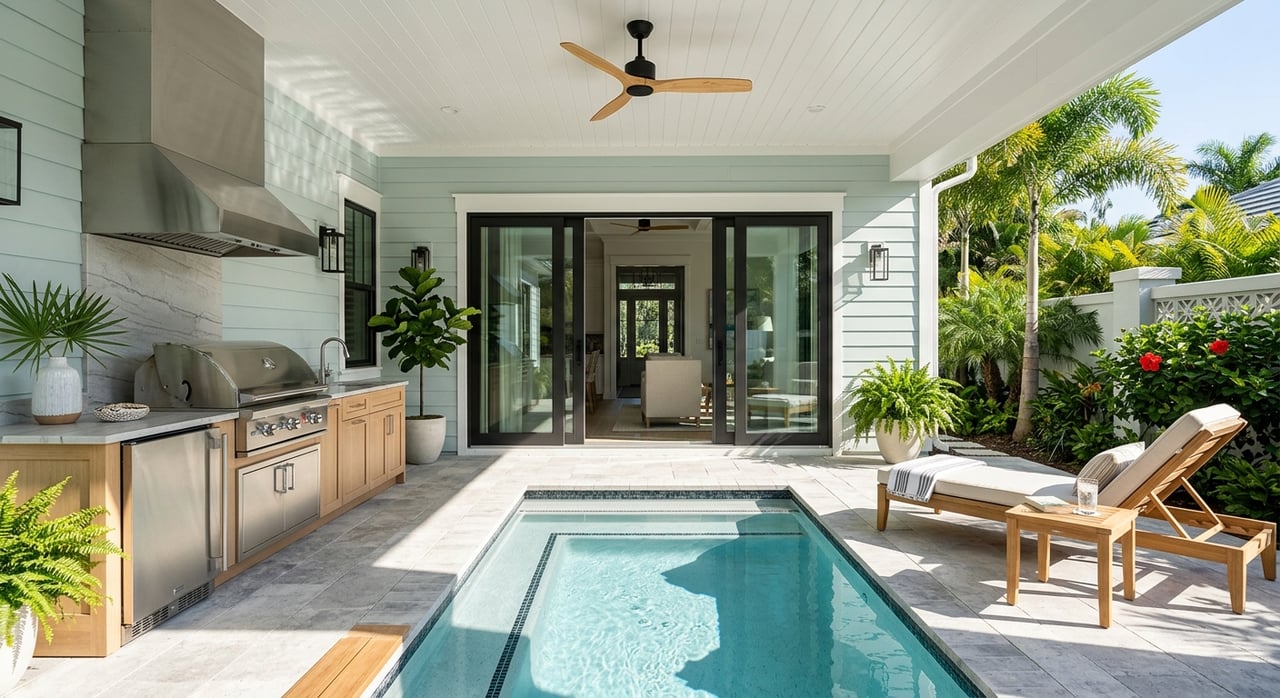
If you want your outdoor space in Sewall’s Point to feel beautiful and work well year-round, design has to do more than look good. Between heat, heavy rain, salt air, and waterfront rules, the best projects are the ones that balance comfort, durability, and smart planning from the start. Whether you are updating your home for your own lifestyle or thinking about future resale, this guide will help you focus on the outdoor features that fit Sewall’s Point and avoid costly missteps. Let’s dive in.
Why Sewall’s Point outdoor design is different
Sewall’s Point has the kind of setting that makes outdoor living especially appealing, but it also comes with real design constraints. Local climate data for nearby Stuart shows an annual mean temperature of 75.3°F, about 62.72 inches of yearly rainfall, and average summer highs around 90 to 91°F.
That combination means your outdoor space needs to handle sun, moisture, and frequent weather shifts. In practical terms, shade, airflow, drainage, and weather-tolerant materials matter just as much as style.
Martin County resilience materials also point to regional stresses like flooding, sea level rise, coastal erosion, and saltwater intrusion. If your home is on or near the water, those factors should shape decisions about layout, finishes, and long-term maintenance.
Start with the site before the style
In Sewall’s Point, a great-looking plan can still fail if it does not fit the lot. That is especially true on waterfront properties, where setbacks can vary based on lot history and shoreline type.
Town code treats some older waterfront lots differently from newer or undeveloped ones. On certain riverfront lots, buildings and some walls, fences, and railings must stay 50 feet from the mean high-water line, while some older lots may retain a 25-foot setback to the mean high-water line or seawall.
That is why a current survey and lot-specific review should come first. Before you sketch a lanai, pool deck, or dockside feature, you want to know exactly what the property allows.
Covered lanais add comfort and appeal
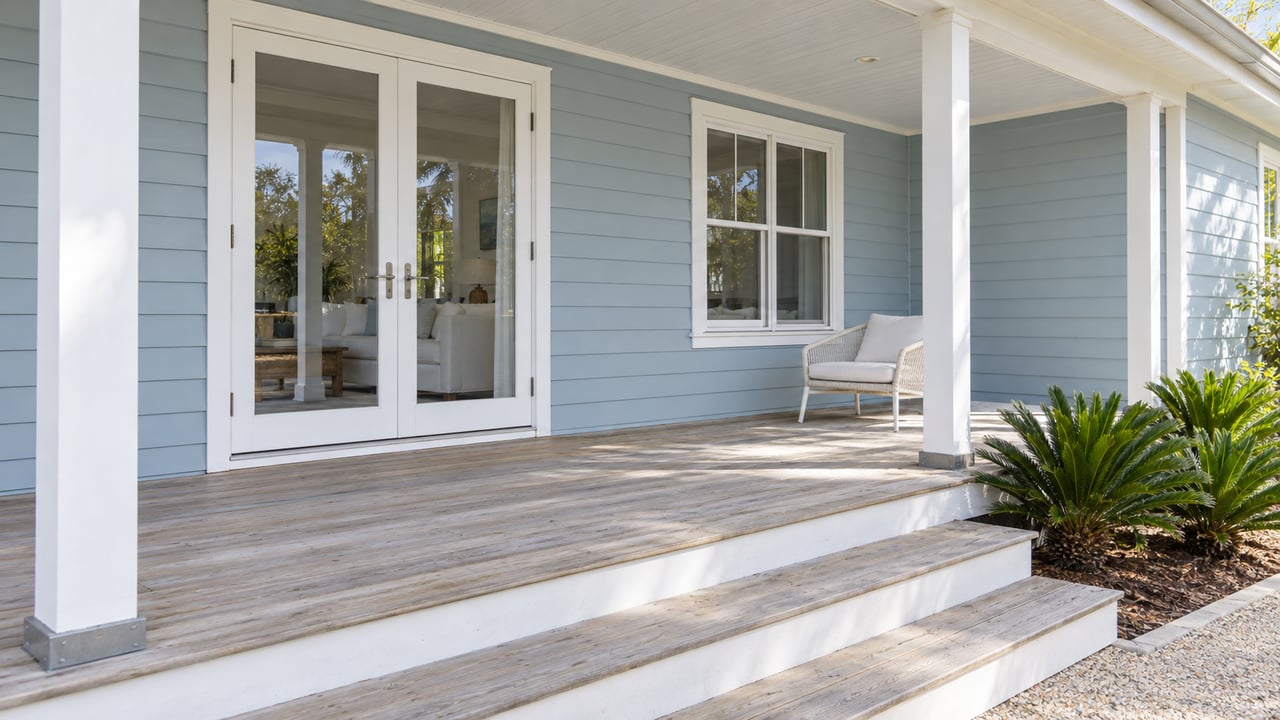
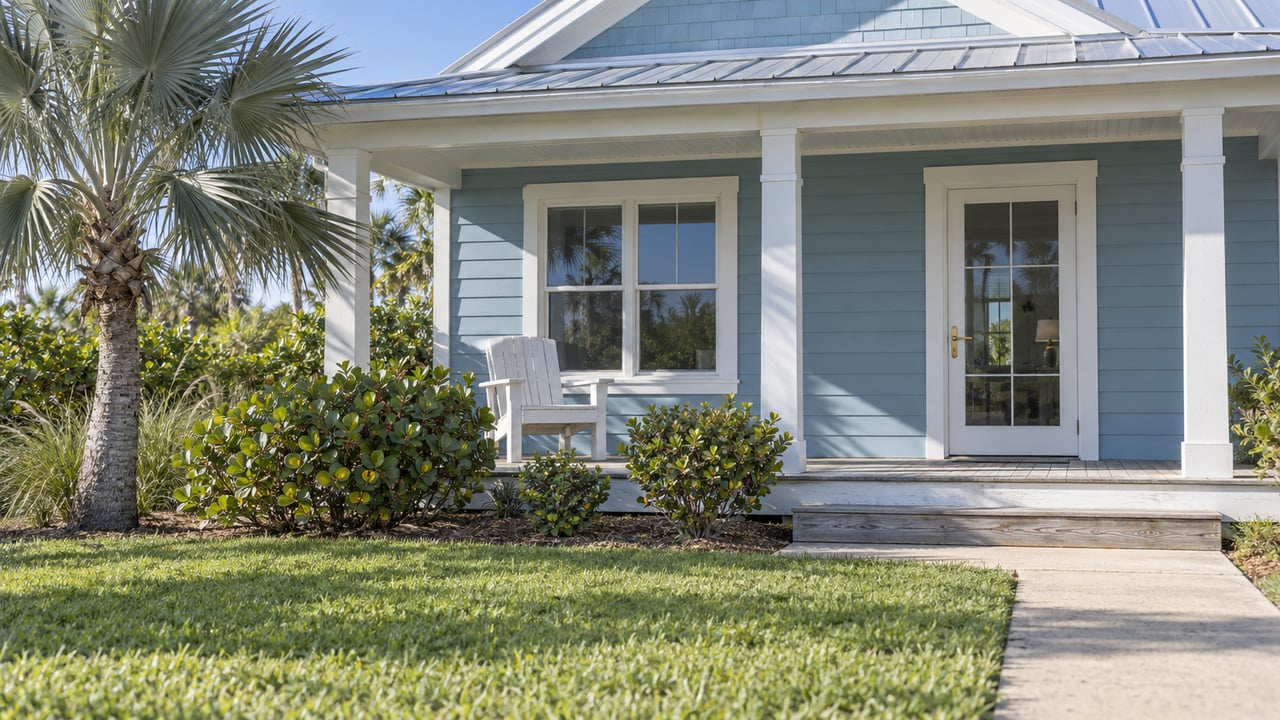
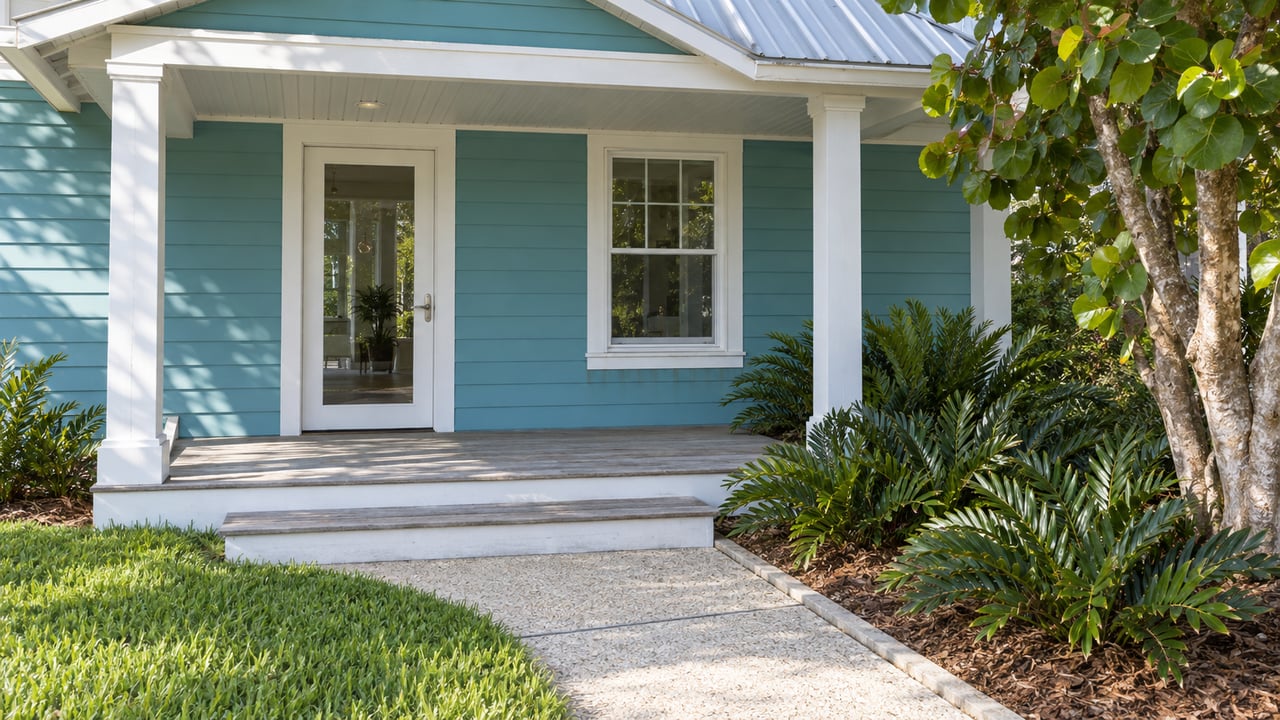
A covered lanai is one of the most useful upgrades for a coastal Florida home. It gives you a place to sit, dine, or entertain with protection from direct sun and sudden rain.
This kind of feature also lines up with broader design demand. The AIA Home Design Trends Survey reports that outdoor living spaces and blended indoor-outdoor areas continue to rank among the most popular exterior features.
In Sewall’s Point, the most successful lanais usually feel connected to the house rather than added on as an afterthought. Clean rooflines, easy access from interior living areas, and enough room for circulation can make the whole home feel more functional.
Martin County lists patios, patio covers, roofs, and screen rooms or enclosures among the projects that typically require permits. If you are planning one of these upgrades, it is smart to confirm requirements before construction begins.
Screened spaces can improve everyday use
Screen enclosures can make outdoor areas easier to enjoy through more of the year. They can also help define a sitting or dining zone without fully closing it off.
Because Sewall’s Point is hot and rainy, screened spaces tend to work best when they still allow good airflow. The goal is not just shelter, but a comfortable outdoor room that feels breezy and usable.
Summer kitchens work best when compact and protected
An outdoor kitchen sounds simple, but in many cases it quickly becomes a more technical project. Once you add gas, plumbing, electrical, or a roofed cover, the review process usually becomes more involved.
Martin County lists outdoor kitchens as permit-required work. That makes early planning especially important if you want to avoid redesigns later.
In Sewall’s Point, a compact layout is often the smartest move. A grilling zone with prep space, practical storage, and protection from salt spray and wind-driven rain can be easier to maintain than an oversized setup with too many exposed components.
Focus on function over excess
A well-designed outdoor kitchen should support the way you actually live. If you mainly grill and entertain casually, you may get more value from a simple, shaded layout than from adding every possible appliance.
That approach also tends to age better. Buyers often respond well to outdoor features that look polished, integrated, and easy to maintain.
Pools need careful planning near the water
Pools are a major lifestyle feature in coastal Florida, but in Sewall’s Point they require close attention to both permitting and siting. Martin County requires permits for swimming pools and spas, with separate checklists for pool enclosures and pool barriers.
Those submissions commonly call for a building permit application and a current survey or site plan showing drainage, flood zone, setbacks, easements, landscape buffers, and preserve areas. Depending on the scope, sealed plans may also be required.
Sewall’s Point adds waterfront-specific rules that can affect design. For example, pool deck finish elevation within 50 feet of the high-water line or seawall may not exceed 18 inches above average natural grade.
There are also rules stating that setback reductions for pools and related decks on riverfront or waterfront lots must be offset by greater setbacks for the residence and accessory structures. In short, a pool plan that works on one lot may not work on the next.
Drainage matters as much as the pool itself
Because this area sees significant rainfall, pool planning should account for how water moves across the site. Deck layout, grading, and nearby hardscape all affect how well the space performs after a storm.
A pool that looks great on paper but creates drainage issues can become frustrating fast. That is one reason site planning should happen before finishes and furniture become the main focus.
Dockside shade has specific limits
For waterfront homeowners, dockside seating can sound like a natural extension of outdoor living. In Sewall’s Point, though, these features are tightly defined by code.
Town rules state that the only allowable dock structures are boat lift covers and dock gazebos. Dock gazebos are defined as open-sided shade structures for standing or sitting, limited to 150 square feet and 15 feet in height, and they should complement the existing residence.
That means you cannot assume a larger enclosed structure will be allowed at the dock. If you are considering any waterward addition, early review is important because Florida dock permitting can vary based on project size and location.
Choose materials for coastal durability
In a waterfront environment, materials need to do more than match the home’s style. Salt spray and moisture can shorten the life of exposed hardware, finishes, and outdoor surfaces if they are not chosen carefully.
NASA notes that coastal and ocean structures require more corrosion protection than inland structures because of salt exposure. In Sewall’s Point, that supports a practical design approach centered on corrosion-resistant hardware, durable finishes, and lower-maintenance hardscape.
It also helps to think about repair and upkeep at the design stage. Materials and details that can be rinsed, cleaned, or replaced without major disruption often make more sense than features that look impressive at first but are difficult to maintain.
Low-maintenance design supports resale
Durability is not just a convenience issue. It can also support market appeal when buyers see a space that looks intentional and manageable.
AIA survey findings show ongoing interest in low-irrigation and low-maintenance landscape ideas. That fits Sewall’s Point well, where many homeowners value outdoor spaces that feel polished without requiring constant upkeep.
What tends to add the most value
The outdoor projects that usually feel most marketable in Sewall’s Point are the ones that work naturally with the house and the lot. Buyers often respond to spaces that feel engineered and cohesive, not improvised.
That usually means features like:
- Covered seating areas with good shade and airflow
- Smooth indoor-outdoor circulation
- Pools and decks designed with drainage and setbacks in mind
- Outdoor kitchens sized for real use and easier maintenance
- Durable finishes suited to salt air and rain
- Clean, low-maintenance landscaping concepts
Houzz reports that one-third of homeowners upgrading outdoor areas are doing so to extend living space. That helps explain why well-planned exterior improvements can feel so meaningful to both current owners and future buyers.
A smarter process can prevent costly surprises
In Sewall’s Point, outdoor projects often involve more than one layer of review. The Town of Sewall’s Point Building & Public Works department reviews permits, variances, zoning, floodplain, and building code compliance, while Martin County also provides permit guidance and an online system for common residential work.
For many projects, the usual paperwork pattern includes a permit application, survey or site plan, drainage and flood-zone information, setback details, and sealed plans when required. If a homeowner acts as an owner-builder, Martin County checklists also call for owner-builder disclosure paperwork.
This is where good planning can protect both your budget and timeline. Before construction starts, it helps to understand not only what you want to build, but what the lot and the approval path will support.
How to plan with resale in mind
If you are improving your home with future resale in view, try to think beyond trends alone. In Sewall’s Point, buyers are often drawn to outdoor spaces that feel easy to use, visually calm, and built for the coastal setting.
That does not always mean bigger is better. In many cases, a shaded lanai, a right-sized pool deck, or a practical grilling area creates a stronger impression than a crowded plan with too many disconnected elements.
The goal is simple: create an outdoor space that feels like a natural extension of the home. When the design respects setbacks, handles weather well, and uses resilient materials, it is easier for buyers to see lasting value.
If you are weighing improvements before a sale or trying to understand which outdoor updates may best support value in Sewall’s Point, Trisha Hutchinson brings local market knowledge plus construction and permitting insight to help you plan with confidence.
FAQs
What outdoor projects usually need permits in Sewall’s Point or Martin County?
- Common permit-triggering projects include patio slabs, patio covers or roofs, screen enclosures, outdoor kitchens, pools and spas, pool barriers or enclosures, and dock or boatlift work.
What should a Sewall’s Point homeowner review before designing a waterfront outdoor space?
- A current survey, lot-specific setbacks, drainage conditions, flood-zone details, and any waterfront rules should be reviewed before finalizing a design.
What are the dock gazebo rules for waterfront homes in Sewall’s Point?
- Town code allows dock gazebos as open-sided shade structures for standing or sitting, limited to 150 square feet and 15 feet in height, and designed to complement the residence.
Why do materials matter so much for outdoor living in Sewall’s Point?
- Because the coastal setting brings salt spray, moisture, heat, and heavy rain, corrosion-resistant hardware and durable, lower-maintenance finishes generally perform better over time.
What outdoor features tend to appeal to buyers in Sewall’s Point?
- Covered outdoor living areas, blended indoor-outdoor flow, practical pool and patio layouts, and low-maintenance design choices often align well with buyer preferences and the local coastal lifestyle.