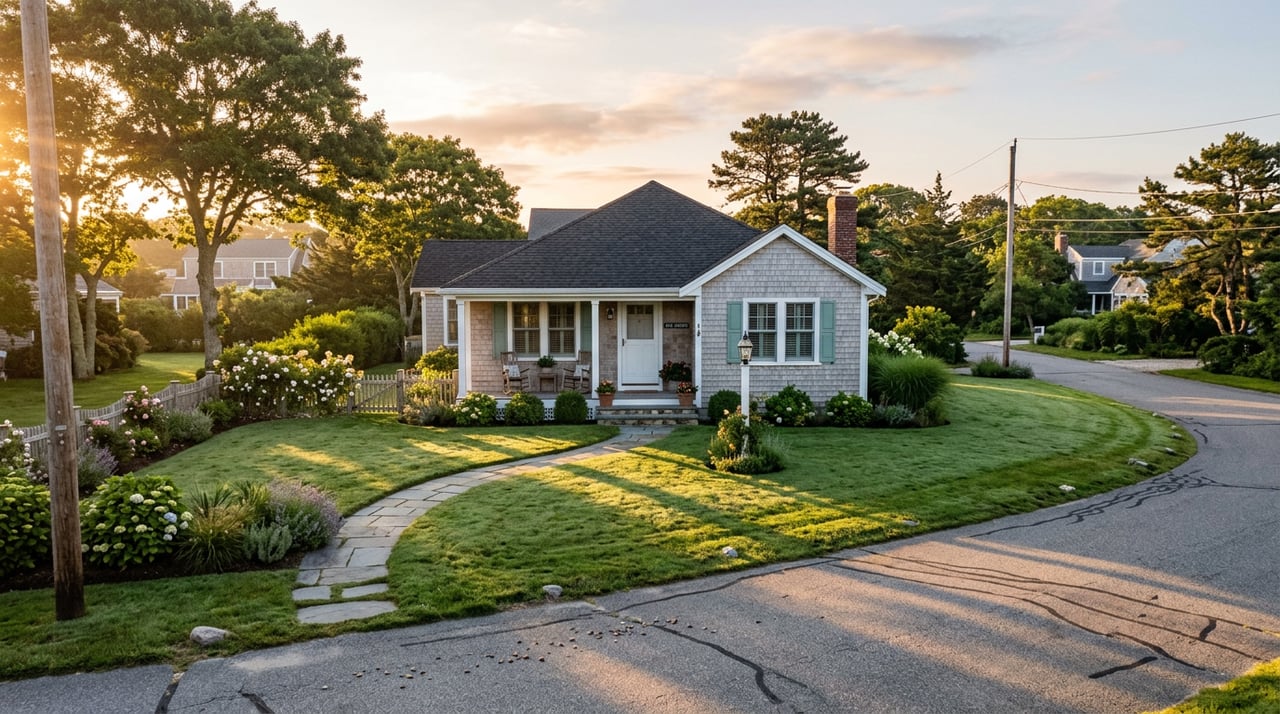
As Hometown News reported, one South Sewall's Point Road homeowner told town commissioners, "It just means we live with a moat on two sides of our property."
The remark came during a town hall last September, where commissioners had discussed how to address king tide flooding for years. What's changed since then isn't the weather. It's the town's willingness to pay for a fix it can finally see working, and that shift says more about Sewall's Point right now than any single ribbon-cutting or gallery opening could.
If you've lived on the peninsula long enough, you remember when that stretch of road wasn't just a flooding problem. It was one of the town's most persistent public debates. Commission meetings ran long over it. Millage rates rose because of it. And for a long time, some residents opposed paying for it. This fall, the road is drier than it's been in years, the tax bill that funded the work has settled into something closer to consensus, and the peninsula's small commercial strip at Harbour Bay Plaza just opened its fall art season like nothing was ever wrong. Both things are true at once, and they're connected.
How the Project Began
The town broke ground on the first phase of the South Sewall's Point Road resiliency project in October 2020. The plan, as officials explained it at the time and as WPTV reported, was straightforward on paper: raise the roadway about a foot and a half, and build what the town's mayor at the time, Frank Fender, called a "treatment train," a series of retention ponds planted to absorb nutrients before stormwater ever reached the Indian River Lagoon. Standing water that used to sit on the road, or worse, drain straight into the lagoon, would instead be captured and filtered first.
Paying for it was the harder part. By the summer of 2021, the town commission was debating a millage rate increase for the first time in years, specifically to create the dedicated funding source the project needed to qualify for federal grants. The town's rate had held at 2.87 for six years running, and a meaningful share of residents showed up to oppose changing that, even after officials warned that without a funding commitment, the grants wouldn't materialize. The rate went up despite objections, creating the funding source the project needed to move forward.
What the Money Actually Bought
Grants started arriving not long after. In February 2022, the town accepted a $3.4 million Resilient Florida Grant Program award toward Phase 3 of the project, a total then projected at $4.37 million. For a town of fewer than 2,000 residents, that's a remarkable amount of outside money to land, and it worked because the earlier millage increase gave the town a local match to point to.
Then came the part nobody budgets for cleanly: construction costs caught up. By April 2023, the town manager told commissioners that the only bid received for Phase 3 had come in at $12.2 million against an original estimate of $8.5 million, a gap driven largely by material and labor costs that had roughly doubled industry-wide over the prior two years. The town ended up negotiating with its sole bidder and splitting the remaining work into smaller contracts just to keep pace with the grant funding already secured, rather than losing the momentum by rebidding from scratch.
Here's the number that tells you whether any of it was worth it. By June 2023, town officials reported that since Phase 1's completion, flooding on that stretch had decreased dramatically and residents were no longer driving through standing water to get home. That's the fact that changed the argument.
A Shift in the Budget Conversation
Fast forward to last September, when commissioners set the town's current millage rate and budget for the fiscal year now closing out. The numbers:
| Metric | Figure |
|---|---|
| Adopted millage rate (Sept. 2025, current fiscal year) | 3.27 |
| Rollback rate (revenue-neutral baseline) | 3.0541 |
| Increase over rollback | 7.07% |
| Total town budget | $26.3 million |
| Resiliency grants secured to date, per resident testimony | more than $20 million |
| Phase 3 cost estimate cited before the 2023 bid | $8.5 million |
| Sole Phase 3 bid received (2023) | $12.2 million |
What's striking isn't the rate itself. It's who showed up to defend it. Hometown News reported that a Riverview Drive resident praised the commission for landing more than $20 million in resiliency grants and warned that stalling the road project would be "a tremendous injustice." A Margarita Road homeowner who moved to town in 2017 called continued underinvestment shortsighted and urged the community to get behind the funding together. That differs from the objections raised during the first rate increase in 2021.
It's not a finished story. The same September meeting included testimony from residents still living with the parts of the project that haven't caught up yet, king tides backing up storm drains near Oakwood, standing water that hasn't gone anywhere. The consensus isn't that the problem is solved. It's that enough of the town has now watched one finished phase actually work to believe the rest is worth finishing too.
The Season Starts Anyway
None of this paused the calendar. Earlier this month, on September 2, the Martin Artisans Guild opened its "Fall Into Art" exhibit at the Palm Room Art Gallery & Artisans Boutique, tucked into Harbour Bay Plaza on SE Ocean Blvd, with a Meet the Artists reception set for October 7. This year's show includes the guild's annual Chances for Art raffle, with proceeds covering entry fees for members heading into the 2026 Martin County Open Studio Tour, a nice bit of small-town circularity where one event underwrites the next.
Walk a few doors down in the same plaza and you'll find The Catch Neighborhood Bar & Grill, a space that's cycled through names over the years, first Prawnbroker, then Stringers, now The Catch, with an interior that still nods to the peninsula's boat-building history through vintage photos and design details. It's the kind of business that outlasts its own signage because the location and the crowd never really change.
That's the other half of what's true on the peninsula this fall. Town Commons Park, right across from Town Hall, keeps hosting the same rotation of gatherings it always has, the 4th of July Bicycle Parade, Movies Under the Stars, the winter Holiday Open House, the kind of low-key civic calendar that doesn't make headlines but fills a Saturday. The town's Tree City designation and its status as an Audubon-certified bird sanctuary aren't new either, but they're part of why a walk down any side street here still feels the way it always has, canopy overhead, water close by, nothing rushed about it.
What Actually Changed
The honest version of this fall's story isn't that Sewall's Point transformed. It's that a five-year infrastructure debate moved closer to agreement, not because anyone changed their mind about taxes in the abstract, but because enough people watched a finished stretch of road stop flooding and decided that was worth paying for. Everything else on the peninsula, the gallery reopening its doors for fall, The Catch filling up on a Friday, kids at the park before the Bicycle Parade, kept happening the whole time, because community life continues while the town works through drainage questions.
If you're a homeowner on this stretch of road and you're curious how a resiliency project like this one actually factors into permitting, insurance conversations, or how appraisers think about flood history when your street comes up in a future sale, that's exactly the kind of question construction and permitting background is built for. Trisha Hutchinson has spent more than 15 years working through exactly this kind of local detail with Palm Beach and Martin County homeowners, and is always glad to talk through what infrastructure changes like these mean for a specific property, whether you're planning to sell someday or just want to understand what you're sitting on.